Environment Management
In This Chapter
- Weather and Climate
- Meteorology
- Solid Waste Management
- Disaster Management
Weather
Example: We give our opinion like "today it is too hot" or "it is very cold today."
Description: Weather depends upon the prevailing condition of the air. The climate of a particular region is the average of daily readings of various weather-related parameters. Temperature, pressure, wind, humidity, and precipitation interact with each other. They influence atmospheric conditions like the direction and velocity of wind, the amount of insolation, cloud cover, and the amount of precipitation. These are known as the elements of both weather and climate. The influence of these elements differs from place to place and time to time — it may be restricted to a small area and a short duration of time.
We often describe this influence in the name of weather as sunny, hot, warm, cold, fine, etc., depending upon the dominant element of weather at a place and point in time. Therefore, weather is the atmospheric condition of a place for a short duration with respect to one or more of its elements.
Changes in Weather
Weather is made up of six main components: temperature, atmospheric pressure, cloud formation, wind, humidity, and rain. A small change to any of these conditions can create a different weather pattern. Weather can change from hour to hour based on these elements:
- Temperature: How hot or cold the air is.
- Air Pressure: The weight of the air pressing down. High pressure brings clear skies; low pressure brings stormy clouds.
- Humidity: How much water vapor is in the air.
- Cloudiness: The types of clouds formed by condensed water.
- Wind: Moving air caused by hot and cold air trading places.
Conclusion: Weather is the atmospheric condition of any place for a short period of time with respect to one or more of its elements, such as temperature, pressure, wind, humidity, precipitation, sunshine, and cloud cover.
Climate
Description: The average weather conditions prevalent from one season to another in the course of a year, over a large area, is known as climate. This average is calculated from data collected over several years (about 35 years) for a larger area. Rajasthan, for example, experiences a hot and arid climate; Kerala has a tropical rainy climate; Greenland has a cold desert climate; and the climate of Central Asia is temperate continental. The climate of a region is considered more or less permanent.
Change in climate: Climate does not change continuously — it is that which remains constant in a region for a long duration. Thus, weather is related to a specific location and specific time, whereas climate is related to a longer duration and a large area. Climate plays a very important role in our day-to-day life — it influences our basic needs like food, clothing, and shelter, as well as our occupation.
Difference Between Weather and Climate
| Weather | Climate |
|---|---|
| The study of atmospheric conditions for a short duration over a limited area. | The study of average weather conditions observed over a long period of time for a larger area. |
| Influenced by any one of its predominant elements, e.g., temperature or humidity. | The collective effect of all its elements. |
| Changes very often. | More or less permanent. |
| Experienced over small areas of a country. | Experienced over a large area of the continent. |
| A place can experience different types of weather conditions in a year. | A place can experience only one type of climate. |
Meteorology
The science that studies the inter-relationship between the various components of air, natural cycles, geological movements of the Earth, and climate is called meteorology. It includes the study of storms, rainfall, thunder, lightning, etc. Depending on the study of such factors, weather forecasts are made.
The word meteorology comes from the Greek words meteoron ("high up in the air") and logos ("study") — i.e., meteorology is the study of the atmosphere. A scientist who studies weather and the atmosphere is called a meteorologist.
Solid Waste Management
Meaning: Many waste materials are generated through various daily human activities — this is called solid waste. If this waste material is decomposed in the proper way, it can be a valuable source of energy.
Types of Solid Waste and Their Sources
- Domestic waste: Waste food, plastic items, vegetable waste, glass, and sheet materials.
- Industrial waste: Chemicals, pigments, ash, metals, etc.
- Biomedical waste: Bandages, gloves, needles, test tubes, medicines, etc.
- Urban waste: Waste generated by households, industry, and large commercial and industrial establishments, vegetable and meat markets.
- Mining waste: Remains of heavy metals like lead, arsenic, cadmium, etc., from mines.
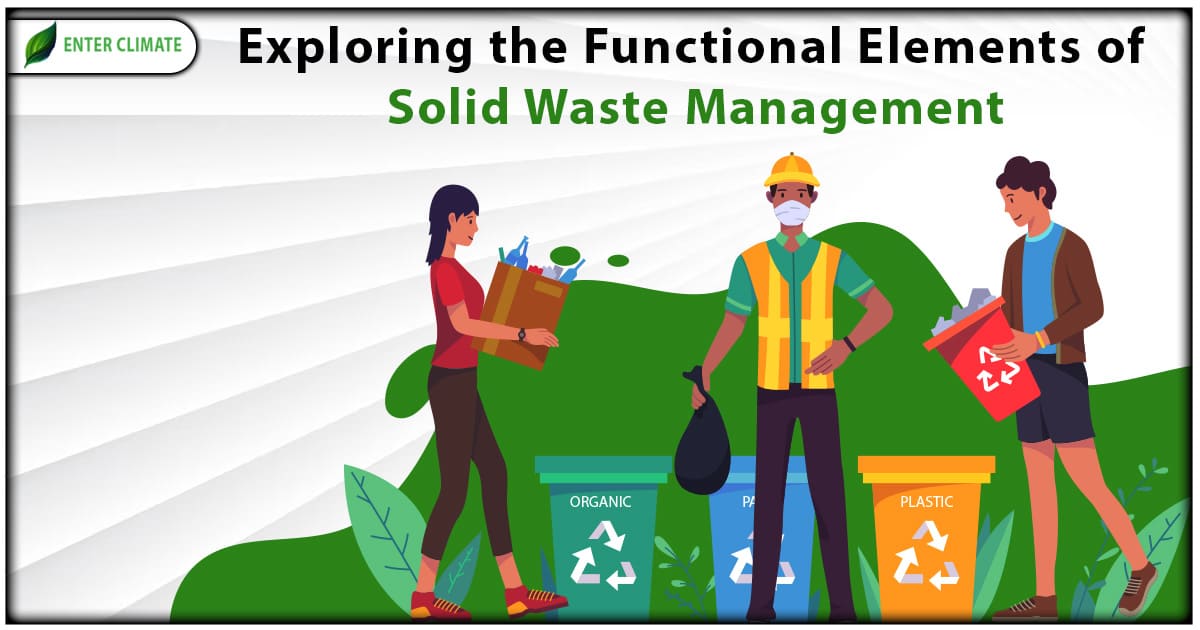
Two Categories of Waste Material
Biodegradable waste: This type of waste is easily degraded by microbes. It mainly includes kitchen waste (spoiled food, fruit, vegetables), ash, soil, dung, and parts of plants, etc. This waste is mainly organic and is also called "wet soil waste" or "wet garbage."
Non-biodegradable waste: This type of waste is not easily degraded because it requires a very long period of time and various techniques. It includes plastic, metals, and other similar materials. This type of waste is also called "dry solid waste" or "dry garbage."
Harmful Effects of Solid Waste
Solid wastes, if not managed properly, can cause several harmful effects on the environment and human health:
- Environmental Pollution: Solid wastes can contaminate soil, water, and air. Leachate from waste dumps can seep into groundwater, polluting drinking water sources.
- Health Hazards: Accumulation of solid waste can attract disease vectors like rats, flies, and mosquitoes, leading to diseases such as malaria, dengue, and cholera. Burning solid waste releases toxic gases, causing respiratory problems.
- Aesthetic and Social Problems: Piles of waste create unpleasant sights and bad odors, reducing quality of life, lowering property values, and discouraging tourism.
- Wildlife Harm: Animals may ingest or get trapped in waste materials, leading to injury or death.
- Climate Change Contribution: Decomposition of organic waste in landfills produces methane, a potent greenhouse gas contributing to global warming.
Proper waste management practices are essential to minimize these harmful effects.
Why It Is Necessary to Manage Solid Waste
- To prevent environmental pollution and keep the surroundings clean.
- For energy as well as fertilizer production, and through that, to generate work and employment opportunities.
- To improve health and quality of life and to maintain environmental balance.
- To reduce the strain on natural resources through treatment of solid waste.
Principles of Solid Waste Management — The 7 "R" Rules
- Reuse: After use, material should be reused for another proper purpose.
- Refuse: Refusal to use articles made from non-degradable materials like plastic and thermocol.
- Recycle: Production of useful articles by recycling solid waste — for example, paper and glass can be recycled.
- Rethinking: Rethinking our habits, activities, and their consequences in connection with the use of various articles of daily life.
- Reduce: Restricting the use of resources to avoid wastage. Old material should be reused; use-and-throw objects should be avoided.
- Research: Conducting research related to the reuse of materials that are temporarily out of use.
- Regulation and Public Awareness: Following laws and rules related to waste management and motivating others to do the same.
Conclusion: It is the need of the hour to implement solid waste management practices to avoid the possible problems caused by solid waste generated from urban and industrial areas, and to maintain a clean environment.
Chapter 9 — Practice Questions
| Instrument | Measures |
|---|---|
| Thermometer | Temperature |
| Barometer | Air pressure |
| Hygrometer | Humidity |
| Rain gauge | Rainfall |
Which instrument would provide evidence that a storm may be appearing?
- Thermometer
- Rain gauge
- Barometer
- Hygrometer
If global temperature continues to rise, how might the water cycle and weather patterns change?
Why is compost useful for plants?
A school produces 50 kg of waste every day. Which practice would reduce the amount sent to landfills the most?
- Burning all waste.
- Segregating and composting biodegradable waste.
- Mixing all waste together.
- Throwing waste into a nearby river.
Which of the following best follows the 3 R's?
- Use — Throw
- Reduce — Reuse — Recycle
- Burn — Bury — Dump
- Collect — Mix — Dispose
What evidence suggests that plastic waste may harm the environment?
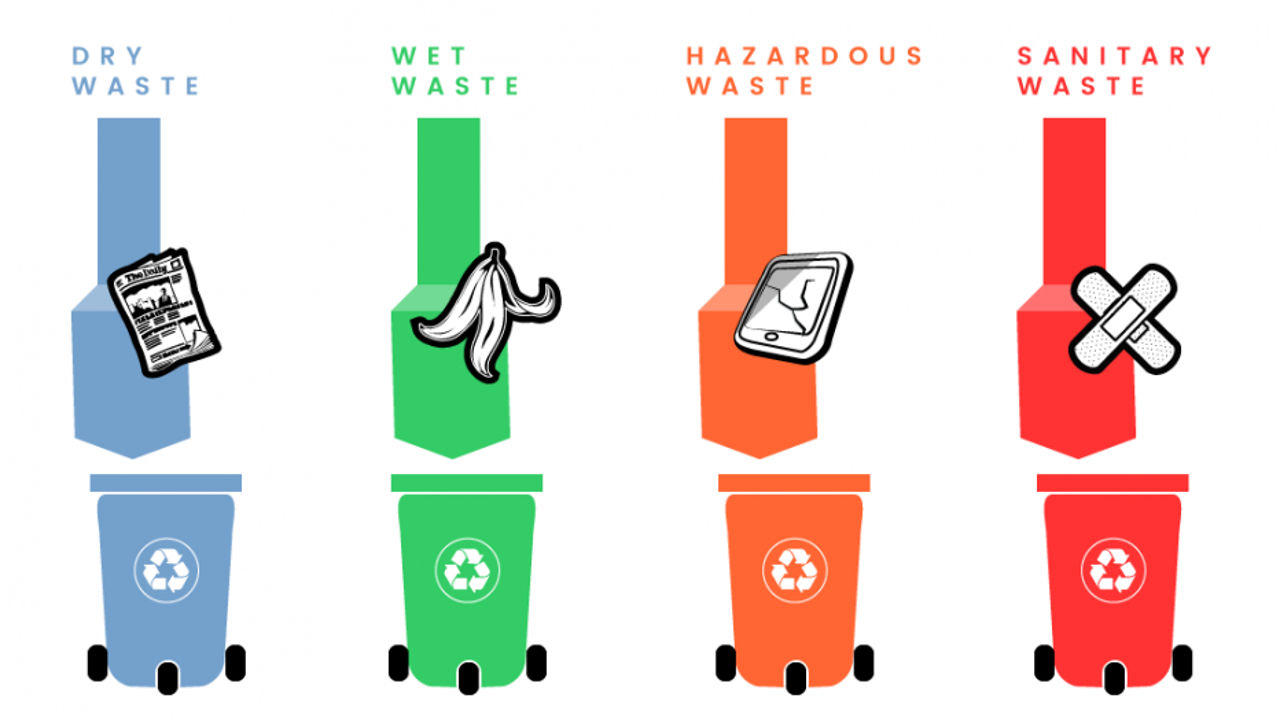
- What is happening in this picture?
- Which item belongs in each bin?
- Why is waste segregation important?